Wednesday, February 28, 2018

Take the Brush Out of Your Hand

I couldn’t get the tree to look right.
I was taking an art class—a painting class, to be more precise—and I couldn’t get the tree to look the way it did in the photograph. My art teacher, who may not have had the utmost faith in my art skills, hovered over me as I futzed with the branches and leaves. I expressed some frustration and asked for advice. In response, she snatched the brush out of my hand, dabbed it in the paint, and produced an exquisite tree on my canvas in no time. “That’s how you do it,” she said. “Thanks,” I muttered. I didn’t know any more about how to paint a tree than I did when I asked for help, and I was suddenly very unproud of my painting as a whole since the most difficult part wasn’t something I could claim responsibility for. How easy is it for us as teachers to take the brush away from our students and complete the painting ourselves, figuratively or literally? Seeing students struggle is hard. Wait time requires patience on our part and perseverance on theirs. Oftentimes it’s easier for us to do it ourselves, to tell them the right answer, to do the heavy lifting. We become like helicopter moms, hovering over our students and rescuing them before they have a chance to make mistakes and figure it out on their own. We have to become more comfortable at watching our students struggle. We have to become better at guiding rather than doing the work ourselves. We have to become encouragers, prompters, questioners, and coaches.

I love when my friends who are parents post videos of their babies working at taking their first steps. Watching the little ones prop themselves up, wobble and catch themselves, reach a moment of balance, and then take the first tentative and precarious step is so exciting and gives me such hope because I know that baby will soon be walking confidently, running, skipping, dancing, riding a bike, and, eventually, navigating the adult world. Along the way, parents, teachers, and other adults will offer guidance, praise, and encouragement, but ultimately the work will be done by that child. There will be times when parents will swoop in to rescue their child. That’s inevitable. But good parents know that people learn by doing, by experimenting, by troubleshooting, and by making mistakes. The college freshman whose mom did his laundry until the moment he left to live in the dorm is going to be walking around with pink socks, pink undershirts, and tighty no-longer-whities unless he finds someone willing to teach him how to wash his own clothes. In my own classroom, I have been completely guilty of metaphorically taking the paint brush away from my students and doing the work myself. I have rewritten their awkward sentences, explained what students should have been getting from something they’ve been reading, told them the “correct” theme of novels and short stories, and provided my own expert analysis of works both artistic and literary rather than letting my students write, interpret, or analyze themselves. I’ve clarified extremely vague student responses by putting words into their mouths rather than asking probing questions to help them state their answers in more complete or articulate fashion. Students in my class learned that they didn’t have to listen to each other because Mr. McKinney would eventually tell them what they needed to take away from the class discussion. Recently, I have also noticed that students have a hard time watching one another struggle. Their patience for wait time may be less than most teachers’. Their camaraderie and esprit de corps cause them to want to rescue one another. This I’ve-got-your-back mentality makes them lousy coaches. I watched some students in a class earlier this week who were supposed to be coaching one another as they attempted to place commas in some commaless sentences. One student made some pretty significant errors. His partner, rather than helping him understand or coaching him through the process, took the pencil away and repunctuated the sentences correctly. The struggling student learned nothing about how to use commas today from his partner, which was not the goal of the paired coaching experience. It’s important that we help students understand something we ourselves often struggle to understand: when you don’t do something for someone, you are doing that person a favor. In other words, it’s better to ask questions than to provide the correct answer. It’s better to let that person do it on their own than to do it for them, but it’s best if you do it alongside them. Don’t grab the pencil and work the problem yourself. Take the paintbrush out of your hand. Provide feedback. Show them how to do a similar example. Ask questions. Help them locate and work through their points of confusion. Peer coaching isn’t answer-giving. AVID students become adept at this type of peer coaching during their in-class Socratic tutorials. The idea is that the members of the tutorial group help one of their members work through a self-identified point of confusion by asking questions rather than by telling them the answer. AVID students know that we learn by doing our own thinking, not by having someone do the thinking for us. We become better at doing things by doing them, not by watching others do them. And once we learn how to do those things ourselves, we can be deservedly proud of our accomplishments. If you’ve never seen an AVID tutorial in action, I encourage you to seek one out. It’s an impressive experience. In the coaching work I do with teachers, I’m working to—as Michael Bungay Stanier says— “tame the advice monster.” It’s so easy to do the thinking for others that it becomes the default practice for many of us. What we know about learning, though, is that true learning happens when the learner does the thinking, not the teacher. I’m trying not to always have the right answer, and I want to work with students to help them understand that often it’s best not to have the right answer and instead to help someone else find the right answer. If that art teacher had let me keep the brush in my hand, if she had explained what to do, offered some suggestions, or even showed me the technique on a separate canvas, I might have liked that painting enough to keep it. Instead, she painted the tree for me. And I still don’t know how to paint one myself.  


Wednesday, February 21, 2018

Face-to-Face (or Side-by-Side) in a One-to-One World


Kids today (I say in my crotchety old man voice) are really good at staring at screens. I guess that’s not a totally new thing. I have photos of me and my brother sitting slack-jawed in front of the television watching Scooby Doo cartoons in our pajamas. My brother spent countless hours playing Atari games while I tuned into every game show our rabbit-ears antenna picked up (Big bucks, no whammies! ... I”ll take Paul Lynde to block.... Survey says…!). 

Screens today are ubiquitous, though. You can’t escape them. Now they fit in your pocket, so there’s no excuse to be away from your electronic device. Teens no longer phone one another; the hours spent tying up the family landline while switching back and forth between two friends on call waiting have been replaced with chats, snaps, tweets, and insta-whatevers with numerous friends and acquaintances around the globe. In many ways, young people are more social now than they ever were. 

But they don’t do a lot of speaking. 

In fact, when given the opportunity to have free time, I’ve found that groups of high schoolers will sit in a circle staring at their phones in silence rather than engage in live, in-person conversation. 


There’s a tiny part of my English teacher self that is pleased that teens are spending more time than ever composing written text for others to read. So much written communication has to have some positive impact on writing skills, right? There’s probably something to that theory, though the flipside is probably just as valid: students’ abilities to write a “correct” sentence are declining. (Incidentally, I recently learned that it’s now considered rude and offensive in the world of teenage electronic communication to punctuate the ends of sentences. A colleague’s fifteen-year-old son informed her that every time she put a period at the end of text it was like she was stabbing him, and another friend’s college-aged son asked her why she was angry when she sent a reply of “Yes.” This is completely off the topic, but I wanted my readers who communicate with their offspring to be aware of their unintentional electronic microaggressions.)  

More alarming to me than the decline in traditional conventions of written English is the dip in spoken interactions among screencentric people. As education moves to an increase in instructional technology in classrooms, teachers need to be mindful not to forget the importance of face-to-face verbal communication. 

Before you dismiss this as the angry rant of a technophobe, let me assure you that I’m no Luddite. Technology opens up so many possibilities to transform the factory model of traditional education by engaging students in authentic writing and inquiry in ways we never would have imagined several decades ago. Collaboration can occur within a classroom, across class periods, and even across the globe. Teachers who know AVID strategies can WICORize traditional lessons with thoughtful technology applications. As many campuses shift to one-to-one environments where every student has a laptop, Chromebook, or other device handy at all times, teachers can harness the power of technology to extend student learning to new frontiers. 

At the same time, teachers run the risk of creating classrooms where digital communication completely replaces speaking. On a technology-rich campus, students could conceivably spend their entire school day sitting in chairs and staring at screens, with all communication occurring electronically. 

I don’t think this is ideal. Students still need to talk to one another. Students still need to get up and out of their seats. Teachers need to plan deliberately to include both of those. 

I’ve often said that the ability to write well gives a person an edge in life. A well-written essay can get you into college. An effective cover letter can land you an interview for a competitive job. A compelling persuasive e-mail can get others to listen to what you have to say. 

It’s also true that the ability to speak clearly gives a person an advantage. Someone who can speak articulately and powerfully can ace an interview, move a crowd to action, convince coworkers to listen to a new idea, and get what they want. A person who is comfortable speaking to another, who makes eye contact, who employs effective body language, and who has a command of spoken language can succeed in higher education and in the workplace. As educators, we have the responsibility to provide our students with every opportunity to hone oral language skills as one of the “basics” along with reading and writing. 

If you’re working on a campus with abundant access to technology, please embrace those powerful tools for reaching students and helping them learn in 21st century ways. At the same time, intentionally build in opportunities for students to talk to one another—in pairs, in small groups, and in more formal larger groupings. Allow them to collaborate as they work on their devices, and not just by sharing a document and typing away in silence. Provide turn-and-talk breaks for students to share what they are learning, strategize about their next moves, offer constructive feedback, and question one another. Explore options for having students communicate orally using technology applications such as video chats and recordings (both video and audio). Don’t forget, though, that speaking at a camera isn’t the same thing as learning to express oneself in front of another human being who can respond in the moment. Developing comfort, poise, and fluency in oral communication will serve our students in so many ways. 

Medical experts have become especially vocal recently about the dangers of sitting. Combining speaking and movement—like asking students to walk and talk with a partner about something they are learning—keeps our classrooms from becoming silent deathtraps. An abundance of  technology in the classroom makes it easy for students to sit; teachers, too, can sit at their desks and monitor student work from their own screens. Be aware that though this may be a learning preference for some, others need to process orally, interact with others, and get their blood flowing through movement. 

Technology is wonderful. So are speaking and movement. Making room for all three turns the 21st century classroom into a brain-based happy place where students can thrive and develop the skills they need to succeed wherever the road of life takes them. 


Wednesday, February 14, 2018

Prisoners Don't Have Choices

At the high school where I used to teach, there was a widely-believed (sub)urban legend that the school was built from a remodeled prison. Despite any evidence to the contrary (“I grew up here in the 80s, kids, and this used to be an empty field. I promise.”), students held steadfast to their belief in the school’s origins. To them, the idea that the school was once a prison was completely sensible. It used to be a prison. Now it just feels like one. 

The school-prison connection is a logical one. Prisons are places where people are kept for long periods of time against their will and are forced to do things that aren’t particularly enjoyable. When you’re in prison—and when you’re in school—someone else decides where you go, where you don’t go, and when you go (or don’t go) there. You adhere to a daily schedule that is punctuated by bells or other audible signals. Bathroom use and other privileges are metered out and limited. The inmates are kept under control by fear, intimidation, strict rules, and harsh punishments doled out by tyrannical authority figures. The worst offenders are separated from the masses and forced to spend time in solitary confinement. There aren’t many windows, recess occurs infrequently, and the cafeteria food isn’t anything to rave about. 

Interestingly, the students who were the most adamant about the prison-turned-school theory were also the ones who were most vocal about their dislike for school itself. It’s also interesting that these same students were often the ones whose choices were most limited during their time at school. 

I’ve taught all levels of students, and I confess to being guilty of inequity. Though I freely offered choices to my gifted and honors students, I frequently limited the options available to the students in my on-level classes. I chose what they read and the pace at which they read it. I only provided one option for classwork and homework. I chose their groups for them, yet I often made them work alone since I didn’t think they could handle the freedom of working with others. Looking back, I’ll admit I sometimes adopted a me vs. them mentality, rather than trying to build strong relationships and to meet them where they were. To many of those students, I was probably just another guard keeping the status quo in the prison. 

In retrospect, there are two changes I would have made to make my students feel less like they were serving time in a prison: connect with them more intentionally and give them choices. 

Connecting with students isn’t that hard, but it does require a shift in the way you view yourself as an educator. It takes letting go of some control, stepping out of the authoritarian role, and taking a risk to venture into the students’ realm. In my current position, I visit many campuses and interact with all levels of students. I have yet to encounter a student who doesn’t respond favorably when I treat him as if he is a person worthy of respect instead of a subordinate or, worse, a nonhuman. Young people love to be seen. Teenagers like to feel someone is taking an interest in them. They need to have their voices heard and to be listened to. The students who loathe the time they spend in school are often the hardest to approach. Many have built substantial walls around themselves and may be guarded in their dealings with others, especially adults. In my interactions now, I try to be the adult who proves them wrong, the one who doesn’t treat recalcitrant kids as they expect to be treated and who tries to see them for who they are. Kids are interesting. Kids have opinions. Even the most reluctant learner has something to say if given a chance.  

Providing choices also requires letting go of some control and trusting that the majority of students, when given the freedom, will make decent decisions—and if not, that they will learn from the poor decisions they make. If we never ask young people to make choices and decide everything for them as they grow up, two things will likely occur: they won’t learn how to make choices and think for themselves, and they will resent the restrictions we place upon them. 

By providing four acceptable options for in-class reading selections, I have given my students the opportunity to control some aspect of their learning. By allowing them to choose from three possible ways to demonstrate mastery of the content, I have put my students in control of their own learning and, perhaps, differentiated the assignment (because more often than not, students will select the option that is an appropriate challenge for their cognitive level). By letting them choose a partner to work with, I acknowledge the social component of learning and honor their desires to engage with friends. By not micromanaging every decision, I show my students that I trust them and dispel the myth that they’re in a place where the grown-ups are wholly in charge because students’ opinions and desires don’t matter.  

Everyone deserves to have choices. In schools, the ones who need choices the most are often the ones who receive them the least. Todd Whitaker, in his book What Great Teachers Do Differently, suggests that educators should make decisions with the best people in mind. In other words, we shouldn’t limit choices because of the few students who can’t handle the freedom or the ambiguity. Instead, we should think about the best students—the ones who thrive on choices and autonomy—and structure our instruction to provide them chances to guide their own learning, to steer their own course, and to determine how to manage their time, their materials, and their interactions. By doing this, we are making schools seem less like prisons and more like places of opportunity and possibility. We are making our schools enjoyable environments for our clients, the students, those whom we hope will shape the future. Giving them choices today will help them make the best choices down the road. Let’s unlock the shackles we’ve been placing on our students and set them free to learn.

Tuesday, February 6, 2018

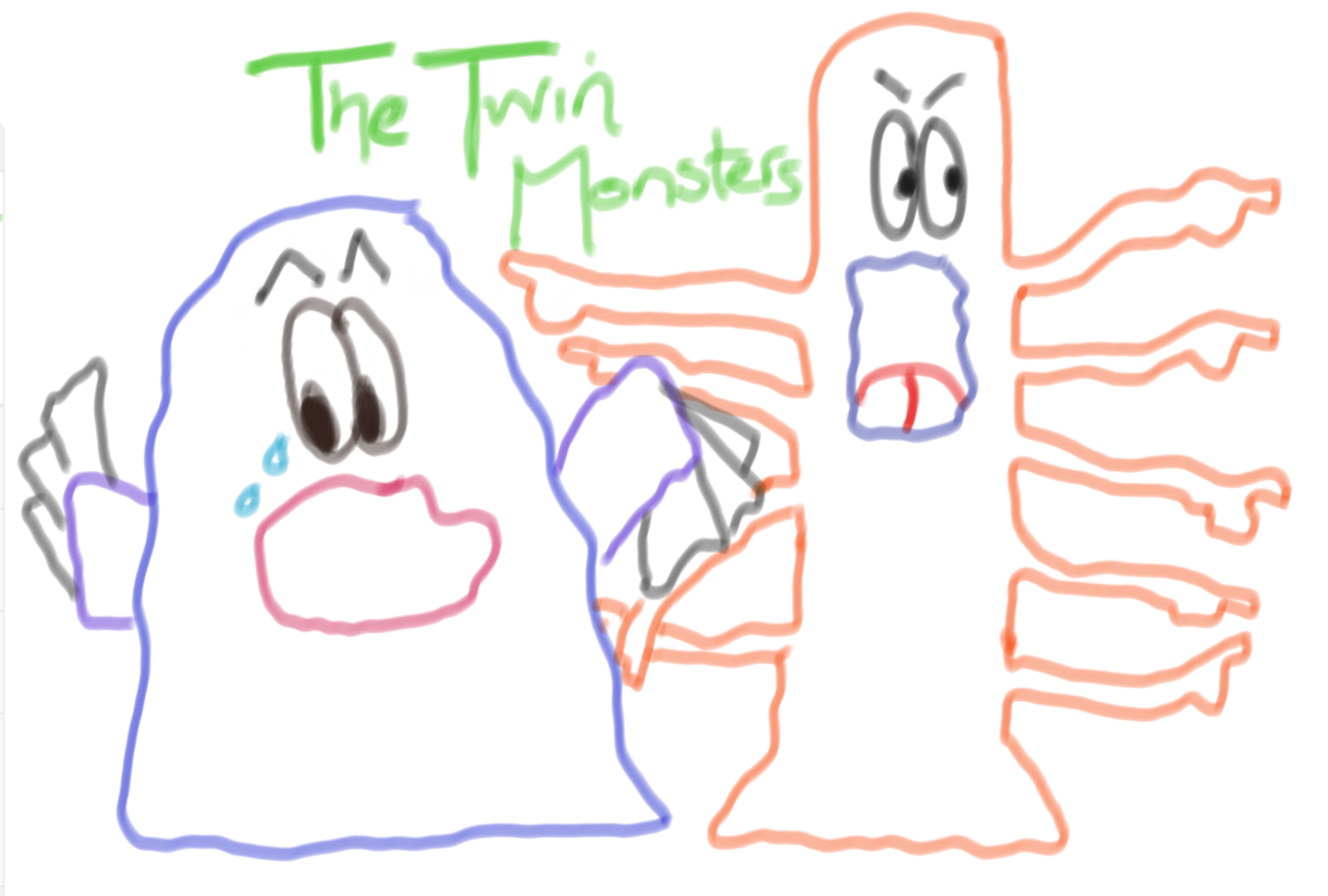
The Twin Monsters


Some students are easier to teach than others. For the first part of my career, my students were a breeze to teach. Most came from affluent or at least middle-class homes where education was a priority. Parents made sure students came to school fed, clothed, and equipped with supplies. A call home fixed nearly every problem in the classroom, from discipline to missing homework. Parents could—and would—bring their kids early or pick them up late if tutorials or remediation was required. All I had to do was show up, run an efficient classroom, assign some work, and grade a lot of papers. I held high standards for my students, and they, for the most part, rose to my expectations.

As time went on, our school’s student population started to change. We still had plenty of the old ready-to-learners, but an ever-increasing number of students showed up at the doorstep of our school with some obvious differences. Many came from poverty. Not all of them spoke English fluently. Quite a few came to us with limited skills. Some had moved from school to school and district to district throughout their educational lives. They didn’t look like our mostly-white, middle-class faculty and staff. They felt like outsiders among the affluent students. For a while we could ignore the changes and keep doing what we had always done. As gaps began to widen and disparities became more glaring, we had to do something about it.

I wish this paragraph could be about all the wonderful solutions we immediately discovered and how we turned everything around and created a dynamic place of learning for all students. The solutions, as anyone who has worked with challenging student populations knows, are not that easy to discover. Instead of talking about those solutions, however, I want to warn of two potential dangers that can surface when we work with students from educationally impoverished backgrounds. I have encountered them. Perhaps you have, too. I’m referring to the twin monsters of blame and pity.


The blame monster is an ugly one, with hundreds of fingers pointing in every direction. This monster appears early in the school year, as soon as the teacher discovers that “these kids” aren’t “where they should be.” The blame monster makes us question the credentials of the teachers who teach in grades below ours; turns us into armchair sociologists who blame demographics, economics, parents, peers, the media, cell phones, popular music, and the Kardashians; and causes us to make—and believe—all sorts of excuses about our students’ limitations. “These kids can’t!” is the battle cry of the teacher in the thrall of the blame monster. The monster spreads its deadly venom, infecting individuals, teams, and—horrible dictu!—entire campuses. Once the poison has spread, it manifests in a variety of guises:  despair, giving up hope, frustration, asking “Why me?”, feeling like you’re the only teacher/ campus/ district ever to face such odds. Teachers spend so much time finding causes for why their students can’t learn that they fail to focus on finding ways to get them to learn.

Teachers who know how to fight off the blame monster know that, though the monster is likely to show up in the first days of the school year, it needs to make its exit as soon as possible. Educators can’t control who walks into their classrooms; they can only control what they do with those students and how they make those students feel about themselves as learners and—equally important—as people. If the blame monster is still lurking around during the second semester and the students haven’t improved, teachers need to place the blame on themselves instead of on others or on outside factors. Quit blaming. Time’s a-wasting. Start teaching.

The pity monster is the blame monster’s less flashy but perhaps more dangerous sibling. Armed with an endless supply of Kleenex and hugs, the pity monster makes sure educators see how hard the lives of “these poor babies” are. Instead of seeing future possibilities, teachers attacked by the pity monster only see obstacles and hardships in the paths of their students, and—as any person with a heart would do—they feel overwhelming compassion. Rising from instinctual kind-heartedness, the pity monster feeds off the emotions of educators, making them fearful of being the ones who put one more difficulty or challenge onto the plates of these sweet kids and their sweet parents. The pity monster leaves a trail of low expectations; second, third, fourth, and fifth chances; thoughts of “It’s the best they can do;” and satisfaction with mediocrity. Students put their names on their paper? They get points. Students answer an easy question in a class discussion? They get a piece of candy. The teacher under the influence of the pity monster becomes the savior of the children, and all these poor babies have to do is show up and make a modicum of effort to receive praise, prizes, and high grades. The bar is set so low that any student can climb over it without difficulty. And if there is a struggle, the educator swoops in to rescue the poor, defenseless creatures and make sure they all succeed.

Defeating the pity monster requires the fortitude to set high expectations for every student, to actually believe that the students can reach those expectations, and to make the student believe they can achieve them, too. All students have to know you believe in them and that you will help make sure they can do all they are capable of. This requires building relationships; seeing the student, not the deficit; banishing the “poor babies” mentality; and getting down to business—no excuses!—in a classroom where you maximize every minute of instructional time because, scholars, you have places to go, and we have work to do to make sure you can get there!

Teaching is a tough job, and I don’t pretend to have all the answers for how to magically reach every student. I have, however, seen enough students in enough schools and to have interacted with enough teachers in my school, my district, and in many parts of the country (and even some in other countries) to know that the twin monsters of blame and pity are real and highly dangerous. They sneak up when we least expect it, and they quickly have us in their clutches. Being aware of the dangers and not being afraid to call them out when they appear is the first step to eradicating them.

All students—no matter where they come from, what skills or deficits they possess, what they look or sound like, or what obstacles they face—deserves the chance for a bright future. The twin monsters want to keep that from them, and we can’t let the monsters win.   


Wednesday, January 31, 2018

Creativity: What It Is and Isn't

Several weeks ago at our district's Flex Learning Saturday, I talked with teachers about the topic of creativity.  I addressed the need for teaching creativity and creative thinking so that our students will become out-of-the-box problem solvers in their lives and careers. The ensuing discussions alerted me to the notion that perhaps creativity is less easily understood than it should be, so I’ve compiled some lists of what creativity is and what creativity is not to help you further define this tricky concept:

Creativity is NOT going to Michaels and spending your paycheck on glitter, stickers, puff paint, felt, and stick-on googly eyeballs.
Creativity is NOT turning in a project that required a lot of time and effort to make pretty.
It is NOT coloring inside the lines or making sure that the ocean is blue and the grass is green. 
Creativity is NOT following a recipe you found on Pinterest to bake a cake you have never made before.
It’s NOT following a pattern to knit a stocking cap or going to a party at Painting With a Twist and following the teacher’s directions to paint a picture that looks like everyone else’s.
Creativity is NOT watching the teacher dress up like a historical figure and deliver a lecture.
Nor is it tweaking one or two phrases in a preexisting song to make the lyrics roughly match a concept being studied. 
Writing in a journal or diary, expressing individual thoughts or opinions, and “being yourself” may not be creative activities. 
Creativity is NOT the same thing as free time, playtime, game time, or recess.

In their 1999 report to the British government on creativity, culture, and education, the National Advisory Committee on Creative and Cultural Education defined creativity as “imaginative activity fashioned so as to produce outcomes that are both original and of value.”  Ken Robinson (whose TED Talk “How Schools Kill Creativity” should be required viewing on the subject) simplifies this only slightly, defining creativity as “the process of having original ideas that have value.”
Using these guidelines, we can begin to shape our thinking about what creativity looks like in our classrooms.

Creativity IS representing one’s learning in a unique way to teach someone what you know.
It’s coming up with a new way to solve a math problem.
It’s devising a new experiment to test a hypothesis.
Creativity IS doing something that doesn’t look like the teacher’s example.
It may involve many drafts, and it may get messy. 
Perhaps the creative thinking won’t even result in a finished product, but the thinking done may later be used in another unexpected situation or context. 
Creativity in the content area classroom shouldn’t be creativity for the sake of creativity; then it doesn’t have value, a component in the above definition.
Creativity IS using someone else’s idea as a springboard to make something entirely different; it’s applying what you’ve learned or discovered in a unique way. 
Creativity IS designing your own coloring book, inventing a new knitting pattern, painting your own picture to decorate your room, writing a monologue in the voice of an historical figure or literary character, applying what you’ve learned about suspense in short stories to write your own story that will cause the reader to lose sleep, making up a new game to pass the time on a rainy day, totally rewriting the words to a song or rap to teach someone about something, and using what’s available in your kitchen to make up a tasty new recipe…and then posting it on Pinterest for other people to make.  Or creating a new website that is different and better than Pinterest.
Creativity IS identifying a problem and then coming up with a solution that no one else thought of. 
 According to creativity guru Paul Torrance, creativity may involve fluency (coming up with numerous ideas), flexibility (solving a problem in many ways or coming up with a wide variety of ideas), originality (thinking up something no one else thought of) and elaboration (adding depth and detail to your thoughts.) 
Creativity may or may not be fun, but it’s a whole lot more exciting than sitting and copying words off a PowerPoint slide.      
As you equip your students with creative thinking skills, ask yourself if your idea passes the Ken Robinson test:  does it produce ideas that are (1) original and (2) have value?  If so, chances are you’re on the right track.
To read more about what Ken Robinson has said about creativity, I recommend this article.               


Are You Watching?

Have you ever taken a moment during a class to watch your students? I mean, really watch them? Kids don’t have great poker faces during school hours, and observing their faces and body language can provide you with plenty of feedback about how well your students are being hooked by your lesson.

It’s one thing to watch students while you are the one doing the talking. Depending on how charismatic an orator you are, you may see a dutiful few who are making eye contact and nodding along with you, a roomful of eager listeners waiting to be filled up with your brilliance, or a bunch of catatonic teens fighting off slumber (and, likely, some who have given up the fight and have succumbed to a nap at their desks). Regardless of how they look, if you’re the one doing the talking in your room, you’re also the one doing most or all of the thinking. That’s not the goal.

In an ideal classroom, we limit teacher talk and shift the cognitive load to our students. Asking students to talk about the content definitely increases student engagement, but it still offers educators plenty of opportunity to look at their students to assess the degree of engagement. Sometimes, students who are supposed to be engaged in partner or small-group classroom conversation actually look like this: 


Staring blankly at the paper in front of them. Slack-jawed. Ignoring one another entirely. Yawning. Expressionless faces. Flat, lifeless conversation.

The mere act of giving students something to talk about doesn’t mean they will eagerly talk about it. I’m guilty—and perhaps you are, too—of providing students something to talk about without giving them a reason to talk about it. Talking about a worksheet doesn’t remove the fact that there’s a worksheet in front of them. Pair-sharing an answer to a dull question only makes it slightly less dull.

When I give students a conversational task, I want to see faces like these:


Smiling. Maybe laughing, Bright-eyed. Animated. Showing visible signs of thinking. Leaning forward. Lively conversation.   

When we give students something provocative, worthwhile, challenging, and intriguing to think about, we pique their curiosity, ignite their interests, and spark their inquiry. If your students don’t appear joyful about their learning, why not? I hope it bothers you and spurs you to think: What can I do to change that?

Here are a few questions to consider if you want to ramp up the engagement level of the student talk in your classroom:

  • Am I asking students to talk about something they care about?
  • If the topic is not intrinsically interesting, what can I do to build their curiosity?
  • Did I tap into their need to express opinions, connect to their experiences, and have fun?
  • Does the task have an element of playfulness, or is it a drudgery?
  • Did I provide an accessible entry point for students to begin the conversation or learning, or have I provided insufficient scaffolding to allow them to approach the learning without intimidation?
  • Is the task clear? Do they know what they are supposed to be doing?
  • Is the task complex and open-ended rather than simplistic? In other words, does the activity warrant conversation and exploration, or is it a one-and-done, quickly answerable question?
  • Did I do everything I can do sell the learning to my students so they have maximum buy-in?
  • If the assignment is not one I designed myself, did I take ownership of the assignment or introduce it as something “they” want my students to do?
  • Are you asking your students to talk about concepts at a level that is above their maturity or interest level?
  • Are the students going to do something worthwhile and interesting with what they discuss?
  • Do my students see the benefit of talking about this topic, believing that they get smarter through interaction with others?  

A good gauge for judging your students’ engagement in your observations is to compare what you observe when your students are interacting socially with friends to what you see when you ask them to talk in your classroom. The difference could look like this:

“Friend talk” is lively, joyful, playful, noisy, animated, casual, comfortable, and pleasurable. Sadly, some “school talk” is silent, dour, filled with pauses, lifeless, drab, uninspired, mechanical, and tedious.

“School talk” with probably never look exactly like “friend talk.” And it probably shouldn’t. It it does, your students probably aren’t really talking about what you’ve asked them to. They’ve abandoned the conversation topic and are now chatting about what they did last weekend. I’m not satisfied, however, with students in academic conversations looking like they are attending a funeral and are struggling to find something to say about the deceased. I want school talk to look more like friend talk than that. I can usually accomplish that by carefully considering what I have my learners talk about and what I ask them to do in their pairs, triads, or quads.

Not coincidentally,  different levels of engagement produce a perceptible noise-level shift, too. Disengaged classroom talk is very quiet. Engaged classroom talk is somewhat louder. Social talk rises to a significantly louder volume level. By simply listening, it’s easy to tell when students are “done” discussing.  


If you haven’t stopped teaching to look—really look—at your students lately, I invite you to quit working so hard, step back, and observe. If you like what you see, keep doing it. If the students’ “school talk” faces look like they’d rather be anywhere else but in your classroom, maybe you can tweak what you’re doing so that your students clamor to talk with one another about the exciting things they’re learning.     

Wednesday, January 10, 2018

The Power of a Nudge

A little nudge can make a big difference. When Sonic sends me a text message informing me that “for today only” grilled cheese sandwiches are on sale for 50 cents each, I’m more likely to make a poor nutritional choice for lunch.  When the grocery store checker asks me if I’d like to make a $1 donation to help fight local hunger, I’m more likely to be philanthropic.  And when my 99-year-old grandma says that I’m getting a little tummy and pokes my belly when I see her at Christmas, I’m more likely to decide to jump back on the exercise bandwagon and forego that bargain grilled cheese from Sonic.

The power of suggestion exerts a mighty influence on us. Nobel Prize-winning behavioral economist Richard H. Thaler, whose book Misbehaving was a captivating read about a field I knew nothing about, examined the ways people are steered by others to make smart decisions that they themselves view as smart decisions after making them. As Thaler and his onetime research partner Cass Sunstein said it, their goal was to “influence choices in a way that will make choosers better off, as judged by themselves.” Thaler addressed the power of such persuasion, saying, “People can be nudged to save for retirement, to get more exercise, and to pay their taxes on time, but they can also be nudged to take out a second mortgage on their home and use the money on a spending binge.” In other words, people can be nudged to make good choices or to make poor choices.

Although the work of Thaler and Sunstein focused on the realm of economics, teachers and other adults in an educational setting have the opportunity to employ the power of the nudge in their interactions with students. In fact, a nudge from a teacher might be the kick-start that sends a student on the path to college.

We have reached the time of the year during which schools start asking students and parents to make decisions about their course selections for next year. Teachers often find themselves in the position to recommend classes to their students and offer advice, sometimes in a official capacity (as in a list submitted to counselors of students who should enroll in specific courses—whether at an advanced or remedial level—or a signature of recommendation on a student’s schedule card) and sometimes in a less formal way (such as giving advice to a student who asks your opinion about what class to take).

Sometimes data comes into play when recommendations are made. Teachers mine student data and identify cutoff points to see which students hit the magic number that makes them eligible for honors courses. Data can be dangerous, though, when it’s the only measure we use to measure student potential.

As I see it, test scores and other data are best used to identify potential in students who might not self-identify into rigorous courses or who might otherwise escape notice of those who are recommending. For instance, a student who didn’t grow up speaking English or who doesn’t come from a language-rich household might score lower on a standardized measure that is linguistically based, but that student’s high score on a nonverbal test of thinking skills (such as the nonverbal portion of the COGAT) indicates overall cognitive ability that might be developed over time in language-related areas. In that case, the student’s standardized data might be a flag to a teacher looking to nudge a student to consider taking a more challenging class.

The danger of standardized scores is that they are often used to justify gatekeeping, the practice of only admitting the top students into classes and excluding those who don’t fit a preconceived profile. I hear teachers speak of students as not being “honors (or AP) material.” Gatekeeping thrives on fixed mindsets like this, and doors of possibility remain closed to students. What teachers may not consider when discouraging a student from taking an advanced class is the long-term impact of not taking that class. Closing an academic door early on makes future doors harder to open.

The students who most need the nudge from teachers are the ones who don’t see the possibilities within themselves or who might not believe that honors and AP courses are for kids like them. Teachers should remain on the lookout for indicators of potential in their students and should let students know what they spot. Curiosity, a highly developed sense of humor, persistence, problem solving abilities, leadership skills, critical thinking, and organization are among the traits teachers should point out to students who possess them. Those students might not see those traits in themselves and may have never considered that those traits could indicate potential for success in challenging coursework.

I always notice the mentions of teachers in the award acceptance speeches that occur this time of year. “I’d like to thank my seventh grade teacher, Mrs. So-and-So, who saw in me something I couldn’t see and encouraged me to try out for the school play, launching my acting career.” “If it weren’t for Mr. Such-and-Such in tenth grade, I wouldn’t have believe that I could become a writer.”  Successful adults can often look back and identify that one adult who identified their potential, pointed it out to them, and gave them a nudge in the right direction. A nudge says, “I believe in you.” A nudge can say, “You can do it.” A nudge can say, “Here’s something you do well that will help you succeed.”

A nudge can also say, “This isn’t for you.”

I don’t want to be the adult who makes that decision on behalf of a young person. I don’t want to be the educator who relies on data to such an extent that I fail to see the human behind the numbers. I want to nudge for good rather than evil, for growth rather than discouragement, and for opportunity rather than oppression.

I want to be thanked someday in an award acceptance speech. I know it’s statistically unlikely to happen, but I figure my odds go up each time I nudge another kid to consider a previously-unconsidered possibility.