Showing posts with label education. Show all posts

Tuesday, September 25, 2018

SchoolWhyde Initiatives

In my years in education, I’ve seen a lot of schoolwide initiatives. Learning styles, cooperative learning, AVID strategies, technology, differentiation, brain-based instruction, writing-across-the-curriculum, critical reading, 21st century learning (which I think may be different from technology, but I’m not entirely certain), social-emotional learning, block lunch. standards-based grading—the list goes on and on. 

I’m not trying to say anything negative about schoolwide initiatives because I fully believe that, if implemented effectively, a well-chosen initiative can transform a school. I’ve seen initiatives that worked well and ones that have failed more colossally than Crystal Pepsi, the Sony Betamax, Jar Jar Binks, the KFC Double Down, and Scrappy Doo. 

Here’s what I think separates the successful initiatives from the ones that fizzle or simply curl up and die. The problem occurs when the change-makers leave the “Why” out of schoolWhyde.  

I assume that most principals and other educational leaders who launch these plans have thought about, studied, read, and consulted experts about these initiatives before deciding to implement them. Much of this thinking and learning happens during the summer, I assume, when things are a little less busy around the school and the principals aren’t putting out fires (hopefully not literally), or maybe the ideas crop up at conferences or other professional learning opportunities. 

So now we have an educational leader who is excited about an idea and is ready to bring it to life. After all, there’s no time to waste because a truly transformational idea needs to be experienced as soon as possible by as many students as possible. So at the next inservice, faculty meeting, or other opportunity, the new initiative is unveiled to the staff.  

“This year, we are going to allow students to retest for a higher grade and redo homework assignments for full credit.” 

“Since we are focusing on schoolwide AVID strategies, I want to see Focused Note-Taking in every classroom.” 

“I want every student to have a 21st Century learning experience in every class this semester.”

“We’ve got Chromebooks, so I want to see them in use!” 

The What is announced, and the teachers excitedly (in most cases) start planning the How. How are we going to make this happen? 

There will probably be trainings. Before- and after-school seminars and workshops will be offered. E-mails will circulated and videos shared. The staff will plunge into the schoolwide initiative. Teams will meet. Lessons will be planned. And now we’re doing [insert name of initiative here] schoolwide.  

Maybe it will work.  And maybe it won’t. 

The reason it may not work, once again, is because we shortchange the Why. Teachers haven’t had the opportunity to wrap their heads around the rationale for the decision. They aren’t all on board. They haven’t become true believers. 

Truly transformational movements aren’t simple. They’re backed by extensive theory, research, and thought. They’re rarely as easy as they seem. 

Take the redo/retest thing, for example. Allowing multiple attempts to complete homework correctly and retake tests flies in the face of the educational experiences of most teachers who are in the classroom now, so most of us haven’t experienced this firsthand from the student perspective. The theory behind it is complex and multifaceted, but it makes good sense. The problem occurs when teachers adopt the wrong reasons for the initiative. It’s not about making sure every kid gets an A. It’s not preventing hurt feelings and panicky parent phone calls. It’s not about instilling high self-esteem. And it’s certainly not about being able to report lower failure rates. Allowing students to redo homework assignments and retest happens because we believe that learning is more important than recording a grade and that sometimes mastering something involves making some mistakes along the way. 

Getting an entire faculty on board with any initiatives requires time to allow everyone—not just the instructional leaders on campus—to ponder, study, think ideas through, ask questions, raise objections, troubleshoot, and establish a unified vision grounded in a shared understanding of the Why behind the What and the How. Getting one’s head wrapped around the ins and outs of any initiative takes time and effort, but good instructional leaders know that the effort will pay off. 

In the case of Focused Note-Taking (one of my personal favorite AVID strategies), teachers need time to understand that it’s not just about the layout of the paper on which the notes are written. Cornell Notes are one type of notes, and they aren’t the best type of notes in every situation.  When educators have a clear vision of why we ask students to take notes in school, how to establish a clear purpose for the note-taking, what are the various types of notes and why each type is useful, how to teach students to make informed note-taking decisions, why the note-taking process springs from research on learning, and how to incorporate multiple meaningful interactions with notes into the learning process, then (and only then) will Focused Note-Taking take off as a schoolwide initiative. 

Teachers must be well-versed in the thinking behind any strategy or initiative so they can “sell” it to students, field questions from parents and colleagues, and make informed instructional decisions about how to bring the initiative to life. Once the entire staff takes ownership of the idea, schoolWhyde implementation succeeds. 

Maybe it's time to do some formative assessment on our campuses to see how well we understand the Whys behind our schoolwide initiatives. Ask one another to explain the thinking behind the movement. If you can't rattle off a list of reasons and explain your thoughts with certainty, ask for clarification, for more information, and for more conversation at the campus level.

If your campus initiatives have stalled out, consider spending some more time in departments, in teams, and as an entire staff to recalibrate your thinking. Read the works of the educational thinkers endorsing these initiatives. Get more professional development. Discuss and clarify the initiative and the research that supports it. Make sure everyone is on board. When all members of the campus community have an understanding that matches that of the ones who are spearheading the initiative, your efforts to spread a practice across a campus will work...and make an impact.

Wednesday, February 28, 2018

Take the Brush Out of Your Hand

I couldn’t get the tree to look right.
I was taking an art class—a painting class, to be more precise—and I couldn’t get the tree to look the way it did in the photograph. My art teacher, who may not have had the utmost faith in my art skills, hovered over me as I futzed with the branches and leaves. I expressed some frustration and asked for advice. In response, she snatched the brush out of my hand, dabbed it in the paint, and produced an exquisite tree on my canvas in no time. “That’s how you do it,” she said. “Thanks,” I muttered. I didn’t know any more about how to paint a tree than I did when I asked for help, and I was suddenly very unproud of my painting as a whole since the most difficult part wasn’t something I could claim responsibility for. How easy is it for us as teachers to take the brush away from our students and complete the painting ourselves, figuratively or literally? Seeing students struggle is hard. Wait time requires patience on our part and perseverance on theirs. Oftentimes it’s easier for us to do it ourselves, to tell them the right answer, to do the heavy lifting. We become like helicopter moms, hovering over our students and rescuing them before they have a chance to make mistakes and figure it out on their own. We have to become more comfortable at watching our students struggle. We have to become better at guiding rather than doing the work ourselves. We have to become encouragers, prompters, questioners, and coaches.

I love when my friends who are parents post videos of their babies working at taking their first steps. Watching the little ones prop themselves up, wobble and catch themselves, reach a moment of balance, and then take the first tentative and precarious step is so exciting and gives me such hope because I know that baby will soon be walking confidently, running, skipping, dancing, riding a bike, and, eventually, navigating the adult world. Along the way, parents, teachers, and other adults will offer guidance, praise, and encouragement, but ultimately the work will be done by that child. There will be times when parents will swoop in to rescue their child. That’s inevitable. But good parents know that people learn by doing, by experimenting, by troubleshooting, and by making mistakes. The college freshman whose mom did his laundry until the moment he left to live in the dorm is going to be walking around with pink socks, pink undershirts, and tighty no-longer-whities unless he finds someone willing to teach him how to wash his own clothes. In my own classroom, I have been completely guilty of metaphorically taking the paint brush away from my students and doing the work myself. I have rewritten their awkward sentences, explained what students should have been getting from something they’ve been reading, told them the “correct” theme of novels and short stories, and provided my own expert analysis of works both artistic and literary rather than letting my students write, interpret, or analyze themselves. I’ve clarified extremely vague student responses by putting words into their mouths rather than asking probing questions to help them state their answers in more complete or articulate fashion. Students in my class learned that they didn’t have to listen to each other because Mr. McKinney would eventually tell them what they needed to take away from the class discussion. Recently, I have also noticed that students have a hard time watching one another struggle. Their patience for wait time may be less than most teachers’. Their camaraderie and esprit de corps cause them to want to rescue one another. This I’ve-got-your-back mentality makes them lousy coaches. I watched some students in a class earlier this week who were supposed to be coaching one another as they attempted to place commas in some commaless sentences. One student made some pretty significant errors. His partner, rather than helping him understand or coaching him through the process, took the pencil away and repunctuated the sentences correctly. The struggling student learned nothing about how to use commas today from his partner, which was not the goal of the paired coaching experience. It’s important that we help students understand something we ourselves often struggle to understand: when you don’t do something for someone, you are doing that person a favor. In other words, it’s better to ask questions than to provide the correct answer. It’s better to let that person do it on their own than to do it for them, but it’s best if you do it alongside them. Don’t grab the pencil and work the problem yourself. Take the paintbrush out of your hand. Provide feedback. Show them how to do a similar example. Ask questions. Help them locate and work through their points of confusion. Peer coaching isn’t answer-giving. AVID students become adept at this type of peer coaching during their in-class Socratic tutorials. The idea is that the members of the tutorial group help one of their members work through a self-identified point of confusion by asking questions rather than by telling them the answer. AVID students know that we learn by doing our own thinking, not by having someone do the thinking for us. We become better at doing things by doing them, not by watching others do them. And once we learn how to do those things ourselves, we can be deservedly proud of our accomplishments. If you’ve never seen an AVID tutorial in action, I encourage you to seek one out. It’s an impressive experience. In the coaching work I do with teachers, I’m working to—as Michael Bungay Stanier says— “tame the advice monster.” It’s so easy to do the thinking for others that it becomes the default practice for many of us. What we know about learning, though, is that true learning happens when the learner does the thinking, not the teacher. I’m trying not to always have the right answer, and I want to work with students to help them understand that often it’s best not to have the right answer and instead to help someone else find the right answer. If that art teacher had let me keep the brush in my hand, if she had explained what to do, offered some suggestions, or even showed me the technique on a separate canvas, I might have liked that painting enough to keep it. Instead, she painted the tree for me. And I still don’t know how to paint one myself.  


Tuesday, February 6, 2018

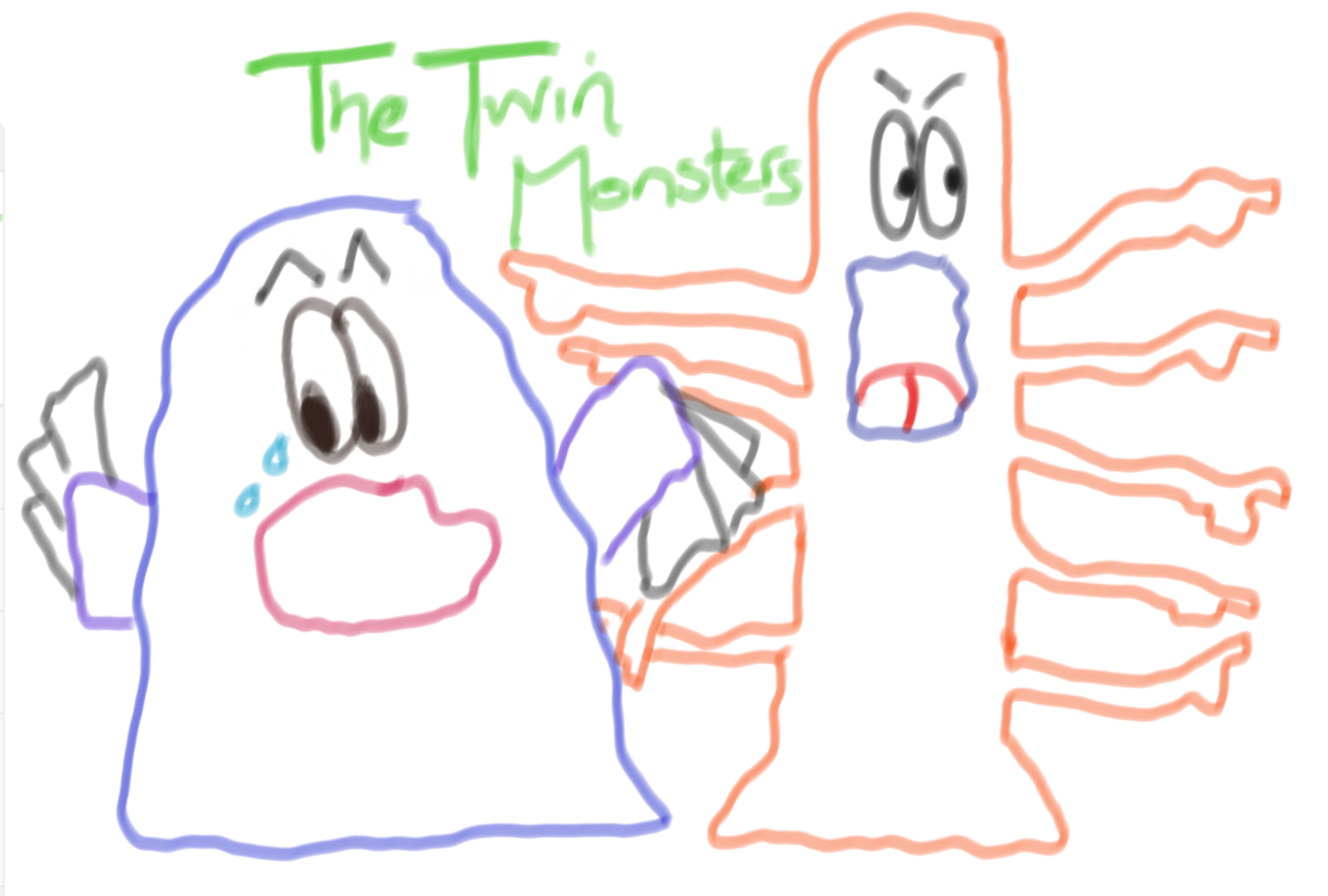
The Twin Monsters


Some students are easier to teach than others. For the first part of my career, my students were a breeze to teach. Most came from affluent or at least middle-class homes where education was a priority. Parents made sure students came to school fed, clothed, and equipped with supplies. A call home fixed nearly every problem in the classroom, from discipline to missing homework. Parents could—and would—bring their kids early or pick them up late if tutorials or remediation was required. All I had to do was show up, run an efficient classroom, assign some work, and grade a lot of papers. I held high standards for my students, and they, for the most part, rose to my expectations.

As time went on, our school’s student population started to change. We still had plenty of the old ready-to-learners, but an ever-increasing number of students showed up at the doorstep of our school with some obvious differences. Many came from poverty. Not all of them spoke English fluently. Quite a few came to us with limited skills. Some had moved from school to school and district to district throughout their educational lives. They didn’t look like our mostly-white, middle-class faculty and staff. They felt like outsiders among the affluent students. For a while we could ignore the changes and keep doing what we had always done. As gaps began to widen and disparities became more glaring, we had to do something about it.

I wish this paragraph could be about all the wonderful solutions we immediately discovered and how we turned everything around and created a dynamic place of learning for all students. The solutions, as anyone who has worked with challenging student populations knows, are not that easy to discover. Instead of talking about those solutions, however, I want to warn of two potential dangers that can surface when we work with students from educationally impoverished backgrounds. I have encountered them. Perhaps you have, too. I’m referring to the twin monsters of blame and pity.


The blame monster is an ugly one, with hundreds of fingers pointing in every direction. This monster appears early in the school year, as soon as the teacher discovers that “these kids” aren’t “where they should be.” The blame monster makes us question the credentials of the teachers who teach in grades below ours; turns us into armchair sociologists who blame demographics, economics, parents, peers, the media, cell phones, popular music, and the Kardashians; and causes us to make—and believe—all sorts of excuses about our students’ limitations. “These kids can’t!” is the battle cry of the teacher in the thrall of the blame monster. The monster spreads its deadly venom, infecting individuals, teams, and—horrible dictu!—entire campuses. Once the poison has spread, it manifests in a variety of guises:  despair, giving up hope, frustration, asking “Why me?”, feeling like you’re the only teacher/ campus/ district ever to face such odds. Teachers spend so much time finding causes for why their students can’t learn that they fail to focus on finding ways to get them to learn.

Teachers who know how to fight off the blame monster know that, though the monster is likely to show up in the first days of the school year, it needs to make its exit as soon as possible. Educators can’t control who walks into their classrooms; they can only control what they do with those students and how they make those students feel about themselves as learners and—equally important—as people. If the blame monster is still lurking around during the second semester and the students haven’t improved, teachers need to place the blame on themselves instead of on others or on outside factors. Quit blaming. Time’s a-wasting. Start teaching.

The pity monster is the blame monster’s less flashy but perhaps more dangerous sibling. Armed with an endless supply of Kleenex and hugs, the pity monster makes sure educators see how hard the lives of “these poor babies” are. Instead of seeing future possibilities, teachers attacked by the pity monster only see obstacles and hardships in the paths of their students, and—as any person with a heart would do—they feel overwhelming compassion. Rising from instinctual kind-heartedness, the pity monster feeds off the emotions of educators, making them fearful of being the ones who put one more difficulty or challenge onto the plates of these sweet kids and their sweet parents. The pity monster leaves a trail of low expectations; second, third, fourth, and fifth chances; thoughts of “It’s the best they can do;” and satisfaction with mediocrity. Students put their names on their paper? They get points. Students answer an easy question in a class discussion? They get a piece of candy. The teacher under the influence of the pity monster becomes the savior of the children, and all these poor babies have to do is show up and make a modicum of effort to receive praise, prizes, and high grades. The bar is set so low that any student can climb over it without difficulty. And if there is a struggle, the educator swoops in to rescue the poor, defenseless creatures and make sure they all succeed.

Defeating the pity monster requires the fortitude to set high expectations for every student, to actually believe that the students can reach those expectations, and to make the student believe they can achieve them, too. All students have to know you believe in them and that you will help make sure they can do all they are capable of. This requires building relationships; seeing the student, not the deficit; banishing the “poor babies” mentality; and getting down to business—no excuses!—in a classroom where you maximize every minute of instructional time because, scholars, you have places to go, and we have work to do to make sure you can get there!

Teaching is a tough job, and I don’t pretend to have all the answers for how to magically reach every student. I have, however, seen enough students in enough schools and to have interacted with enough teachers in my school, my district, and in many parts of the country (and even some in other countries) to know that the twin monsters of blame and pity are real and highly dangerous. They sneak up when we least expect it, and they quickly have us in their clutches. Being aware of the dangers and not being afraid to call them out when they appear is the first step to eradicating them.

All students—no matter where they come from, what skills or deficits they possess, what they look or sound like, or what obstacles they face—deserves the chance for a bright future. The twin monsters want to keep that from them, and we can’t let the monsters win.   


Wednesday, January 10, 2018

The Power of a Nudge

A little nudge can make a big difference. When Sonic sends me a text message informing me that “for today only” grilled cheese sandwiches are on sale for 50 cents each, I’m more likely to make a poor nutritional choice for lunch.  When the grocery store checker asks me if I’d like to make a $1 donation to help fight local hunger, I’m more likely to be philanthropic.  And when my 99-year-old grandma says that I’m getting a little tummy and pokes my belly when I see her at Christmas, I’m more likely to decide to jump back on the exercise bandwagon and forego that bargain grilled cheese from Sonic.

The power of suggestion exerts a mighty influence on us. Nobel Prize-winning behavioral economist Richard H. Thaler, whose book Misbehaving was a captivating read about a field I knew nothing about, examined the ways people are steered by others to make smart decisions that they themselves view as smart decisions after making them. As Thaler and his onetime research partner Cass Sunstein said it, their goal was to “influence choices in a way that will make choosers better off, as judged by themselves.” Thaler addressed the power of such persuasion, saying, “People can be nudged to save for retirement, to get more exercise, and to pay their taxes on time, but they can also be nudged to take out a second mortgage on their home and use the money on a spending binge.” In other words, people can be nudged to make good choices or to make poor choices.

Although the work of Thaler and Sunstein focused on the realm of economics, teachers and other adults in an educational setting have the opportunity to employ the power of the nudge in their interactions with students. In fact, a nudge from a teacher might be the kick-start that sends a student on the path to college.

We have reached the time of the year during which schools start asking students and parents to make decisions about their course selections for next year. Teachers often find themselves in the position to recommend classes to their students and offer advice, sometimes in a official capacity (as in a list submitted to counselors of students who should enroll in specific courses—whether at an advanced or remedial level—or a signature of recommendation on a student’s schedule card) and sometimes in a less formal way (such as giving advice to a student who asks your opinion about what class to take).

Sometimes data comes into play when recommendations are made. Teachers mine student data and identify cutoff points to see which students hit the magic number that makes them eligible for honors courses. Data can be dangerous, though, when it’s the only measure we use to measure student potential.

As I see it, test scores and other data are best used to identify potential in students who might not self-identify into rigorous courses or who might otherwise escape notice of those who are recommending. For instance, a student who didn’t grow up speaking English or who doesn’t come from a language-rich household might score lower on a standardized measure that is linguistically based, but that student’s high score on a nonverbal test of thinking skills (such as the nonverbal portion of the COGAT) indicates overall cognitive ability that might be developed over time in language-related areas. In that case, the student’s standardized data might be a flag to a teacher looking to nudge a student to consider taking a more challenging class.

The danger of standardized scores is that they are often used to justify gatekeeping, the practice of only admitting the top students into classes and excluding those who don’t fit a preconceived profile. I hear teachers speak of students as not being “honors (or AP) material.” Gatekeeping thrives on fixed mindsets like this, and doors of possibility remain closed to students. What teachers may not consider when discouraging a student from taking an advanced class is the long-term impact of not taking that class. Closing an academic door early on makes future doors harder to open.

The students who most need the nudge from teachers are the ones who don’t see the possibilities within themselves or who might not believe that honors and AP courses are for kids like them. Teachers should remain on the lookout for indicators of potential in their students and should let students know what they spot. Curiosity, a highly developed sense of humor, persistence, problem solving abilities, leadership skills, critical thinking, and organization are among the traits teachers should point out to students who possess them. Those students might not see those traits in themselves and may have never considered that those traits could indicate potential for success in challenging coursework.

I always notice the mentions of teachers in the award acceptance speeches that occur this time of year. “I’d like to thank my seventh grade teacher, Mrs. So-and-So, who saw in me something I couldn’t see and encouraged me to try out for the school play, launching my acting career.” “If it weren’t for Mr. Such-and-Such in tenth grade, I wouldn’t have believe that I could become a writer.”  Successful adults can often look back and identify that one adult who identified their potential, pointed it out to them, and gave them a nudge in the right direction. A nudge says, “I believe in you.” A nudge can say, “You can do it.” A nudge can say, “Here’s something you do well that will help you succeed.”

A nudge can also say, “This isn’t for you.”

I don’t want to be the adult who makes that decision on behalf of a young person. I don’t want to be the educator who relies on data to such an extent that I fail to see the human behind the numbers. I want to nudge for good rather than evil, for growth rather than discouragement, and for opportunity rather than oppression.

I want to be thanked someday in an award acceptance speech. I know it’s statistically unlikely to happen, but I figure my odds go up each time I nudge another kid to consider a previously-unconsidered possibility.


Wednesday, October 25, 2017

An Analogy is Like__________

#9:  An Analogy is Like ___________

For many, the word analogy conjures up memories of high school SAT torture. Back in the day, we were subjected to horrific multiple-choice challenges like this one:

perspicacity:  obtuse::  truculence : _________
A. tranquility
B. pacific
C. phlegmatic
D. rancorous

Thankfully, analogies are gone from the SAT, but the practice of teaching our students to think about similarities and differences is still well worth our time as educators. Identifying similarities and differences is one of Robert Marzano’s nine high-yield instructional strategies outlined in his influential book Classroom Instruction That Works. Analogous thinking is important. I’m not saying that we should resurrect the analogies of olden days, which, let’s face it, were really measures of showy vocabulary and test-taking savvy. Instead, I invite you to think about more authentic, engaging ways to help your students discern differences and spot similarities.

The easiest and most foundational (but still important) way is to ask students to consider similarities and differences within your curriculum:

  • What are the similarities between persuasive and expository essays?
  • How is Scout similar to her father, Atticus?
  • What parallels can you find between the Texas legislature and the national legislature? What are the distinctions between them?
  • How can you tell a plant cell from an animal cell? What features do they have in common? What’s different?
  • What are the similarities and differences between proportional and nonproportional linear relationships?


This kind of thinking helps learners see patterns and make connections. Additionally, students can clarify their understandings and fit their learning into a larger schema. Once they get in the habit of seeking clarification by finding similarities and differences, they will begin to look for patterns in new learning, trying to see how it intersects with their established understanding.

My alma mater, Southwestern University, is taking this to the next level by asking students and faculty to foster the exploration of connections among courses and disciplines. Their Paideia principle, which is a foundation for the university’s instructional philosophy, explicitly endorses connecting and finding similarities throughout a student’s post-secondary experience. Their website explains the Paideia concept:

Paideia centers on making connections between different ways of knowing and understanding complex issues, between academic coursework and campus life experiences, and between one’s own life and the world around them. Paideia encourages students to explore the complexity of life’s challenges through integrating multiple viewpoints and perspectives, and by engaging in intensive, varied experiences.

Southwestern is thinking ahead as it considers the possibilities of a truly interconnected curriculum. In the first years of implementation of Paideia, Southwestern has already seen changes in the approaches to learning of its faculty and its students. With the expectation that connections will be made in every class and in every discipline, faculty members are stepping outside their offices and having interdepartmental conversations, and students are understanding that an education isn’t a series of isolated, unrelated experiences.   

Many elementary schools have mastered the cross-curricular connection idea as teachers who teach the same students a variety of subjects help their students see similarities throughout their academic day. Students may consider the importance of systems in solving mathematical problems, in running a smooth city, and in the functioning of the human body. Though the systems have many differences, commonalities exist. Strengthening these connections promotes powerful, long-lasting learning.

Secondary educators have to work harder to make these connections because learning seems to become more compartmentalized and departmentalized as students get older. Creating an awareness of what’s being studied throughout the building is a start. A great way to end a lesson might be to throw the similarity-finding back onto the students: “Who can tell us how what we learned today is similar from something you’ve learned in another class?” The students’ responses might surprise you, and, if you practice this routinely, students may develop the habit of noticing more similarities and connections to share.

Perhaps my favorite analogous thinking strategy is synectics, the making of forced, unexpected connections. Students expect to compare mitosis and meiosis in a biology class, but it’s a different—and perhaps more intriguing challenge—to consider the question, “How is mitosis like making cookies?” or “How is meiosis like a middle school social?”  

I sometimes like to allow students to brainstorm a list of topics—actions, famous people, things you find in a school, modes of transportation, etc.— and then choose one connection to elaborate on:

  • The protagonist in the story is like a bowl of cereal because...
  • Conducting a chemistry lab experiment is like planning a vacation because...   
  • Linear equations are like GPS systems because…
  • The U.S. Constitution is like Clark High School because…

Students enjoy the novelty and playfulness of making these forced connections, and finding similarities between seemingly disparate things stretches students to consider the traits and qualities of both subjects in order to find what they have in common.

Making connections doesn’t have to be a lengthy activity. If you find yourself with a handful of minutes remaining at the end of a class period, throwing a question out to the class asking them to identify some similarities and differences leaves the students thinking more deeply about the topic and reinforces the day’s learning. It’s also a way to check for understandings and misconceptions so you’ll know what kind of reteaching or clarification is needed the following day.

One reminder: it’s easy for us to make connections because we presumably already know the content we are teaching. The students need to be the ones doing the heavy lifting here. Help them learn to wrestle with ambiguity, to persevere in the midst of a challenge, and to seek their own understandings. That’s how learning happens.

By the way, in case it’s been bothering you since the beginning of this article, the answer is B.


Wednesday, May 17, 2017

Two Ideas to Let Steep During Your Summer Break

One of the joys of summer during my childhood was sun tea. There was something especially wonderful about filling a big jar with water, dropping in a few tea bags, and letting the tea steep in a sunny spot in the backyard for the afternoon. A tall glass of sun tea with a sprig of mint snipped from the garden and a squeeze of fresh lemon surpassed the quality of traditional boiling-water-brewed tea and, not surprisingly, the instant Nestea or Lipton varieties. Perhaps the difference was merely in my brain, but I’d like to think that allowing the tea to brew slowly over a long period of time produced something superior.


Ideas are a lot like that. The ones we let steep for a long time are often better than the ones we cook up in a jiffy. When I have a problem to solve, I often find it’s useful to let it marinade over time rather than try to solve it in an afternoon. The summer is the perfect time to passively ponder over something that you can put into place at the beginning of the new school year.

If you don’t already have a burning question you hope to ruminate over during your vacation, I have two suggestions of topics that, because of their complexity, might not present easy answers at first but could transform your teaching practices in the fall if you had an opportunity to think about them in depth:  the state of your gradebook and your classroom expectations.

The State of Your Gradebook       

Grading has been a hot topic in recent years, and, if the chatter I see in my Twitter newsfeed is any indication, it’s not going away anytime soon. There’s a call for change in schools because people have realized that our long-held practices about grading don’t accomplish what grading is supposed to.

Your gradebook should do more than just provide a numerical proclamation of a student’s performance in your class. The numbers are meaningless unless your gradebook provides worthwhile, usable information about a student’s progress toward mastery of objectives in your class. This means that every entry— major or minor— communicates to students and parents what a student does or does not know or know how to do. This also means that things such as “completion” grades and “participation” grades need to go. Teachers embracing gradebook reform have to rethink what their gradebook looks like, what constitutes a meaningful grade, how many grades need to be taken, when and how students can redo an assignment to reach mastery, how this intersects with the district’s curriculum, and what this looks like in a teaming situation with multiple teachers teaching the same class on a campus. Such change will certainly necessitate discussion among teachers and administrators and some re-education of students and parents.

Wrapping my head around this boggles my brain because it’s hard to unlearn something that was a part of my upbringing in the school system as well as my accepted practice for decades of classroom teaching. I’m convinced, though, that it’s time for a change, and this is something I might need a summer to ponder to figure out for myself.  

Clarifying Classroom Expectations
A second thorny topic has to do with classroom management. Once upon a time, I’d spend hours over the summer devising a new set of rules and consequences to be unveiled on the first day of school to a new crop of future offenders. What behaviors are unacceptable? How many times should a student be allowed to leave the room and for how long? How many warnings occur before something terrible happens? How will I display my rules and consequences so my students will know what dreaded fate awaits them if they violate my policies? Should I underline the word “not” each time it appears on my list of rules, put it in boldface, italicize it, or do all three?

The reading I’ve been doing lately on the subject of classroom management says that punishment it out and expectations are in.

Effective teachers teach students the behavioral expectations for each activity that occurs in their classroom: how to enter and leave the room, what to do when the tardy bell rings, what reading time looks and sounds like, what happens during group work, what to do when you finish an assignment early, and what to do if you have a question or need assistance. At the beginning of school, teachers communicate, practice, and model these expectations, and then they hold their students accountable for them consistently throughout the year, reteaching as necessary and reinforcing the desired behaviors as they observe them.

What this means is that I need to spend some time clarifying my expectations for myself. What situations are likely to occur in my room, what do I want the students to be doing in each instance, and how can I communicate those most clearly to my students at the beginning of school? Setting up clear procedures at the outset is the best way to have a classroom that functions smoothly throughout the year, and that requires clarity in the mind of the teacher. I’d let that one brew over the summer so I have a clear picture in my mind when it’s time to go back to school in August.

Sun tea doesn’t take a lot of work or effort to make, but the result is worth the wait time. Similarly, having an idea in your head— one of the ones I suggested or one you’ve dreamed up yourself— gives you something to ponder in a low-stress environment, the kind where the best ideas develop slowly over time without a lot of conscious work on your part. Maybe you’ll have some inspiration and clarity in a moment of unconscious reflection that will pay off for you in the fall.  

I just read on the internet that sun tea might harbor deadly bacteria because the water doesn’t get hot enough to kill the bad microbes in your tea. So don’t get so gung-ho about the nostalgia that you poison your family and friends. Maybe you could enjoy a snowcone instead. The metaphor isn’t as good, but at least it won’t kill you.

Monday, April 17, 2017

Guilty!

We’ve all done it. Each one of us is guilty. And some of us don’t even know what we are guilty of.


Here’s an example of a time I was unknowingly guilty:  My English students were in the midst of a study of Romeo and Juliet. My main goals during the unit were to familiarize my students with the language of Shakespeare and equip them with the reading strategies they could use to analyze difficult poetic text. In a planning meeting, our team came up with an assignment we thought our students would enjoy completing. We provided four options students could choose from:  
  • working with a group to rewrite a scene into more contemporary language and perform their modernized scene for the class
  • illustrating a scene from the play in a comic-book-style format
  • writing diary entries from the perspective of Romeo or Juliet about the events taking place during the play
  • watching or reading a contemporary adaptation of the play and writing an essay about parallels with Shakespeare’s original text
We gave the assignment, the students chose their options, and they set out to work. We crafted a generic rubric that would apply to all four options and awaited the student creativity.


What we were guilty of, even though we had the very best of intentions, was not aligning our assessments with the instructional goals. The goals, as I stated earlier, related to students’ abilities to comprehend Shakespearean poetic language independently. The assessments, depending on what students selected, measured a variety of things. Acting out a modern scene in a group assessed the ability of one person in a group to be able to rewrite a scene from the play and for all the members of the group to perform the script effectively. The comic book tested a student’s ability to draw but not necessarily to have a keen understanding of what the language means, especially if the student paid attention to the scenes from the film I’d showed in class and could render them on paper. The diary required insight into character, an understanding of the plot, and some writing ability. The modern adaptation analysis assessed whether a student could write a compare/contrast essay (or, perhaps, the student’s Google skills).


None of the options we gave our students was terrible. They simply had little to do with the objectives of the unit and were thus not an accurate assessment of student learning. Furthermore, the four assessments didn’t even assess the same skills. A student could strategically select an option that played to his or her strengths and never have to demonstrate actual learning of a curricular objective.  


Every teacher has had a planning brainstorm about something that would engage students and has inserted it into the curriculum without spending the time to think about how the new idea fits with unit objectives. WIth more deliberate planning, however, we can make sure we never commit this instructional crime again.


Two questions developed by WIggins and McTighe in The Understanding By Design Guide to Creating High-Quality Units help me think about how assessments align with unit goals:
  1. Could students do the proposed assignment(s) well but not really have mastered or understood the content in question?
  2. Could students do poorly on the specific assessment(s) but really have mastery of the content in question? (p. 53)


In the case of my Romeo and Juliet assignment explained above, I can answer yes to both questions, which isn’t a good thing.  


Yes, a student could give a convincing and impressive performance of a modernized scene from the play without knowing anything about how to read and interpret Shakespearean verse.


Yes, a learner who knows how to read Shakespeare could make a C if she didn’t have the art skills to draw a comprehensible comic book rendering of a scene.


Yes, a student could write an awesome diary from Juliet’s perspective with only knowledge gained from watching the film or reading the Sparknotes online.


Yes, a kid could analyze West Side Story as a Romeo and Juliet adaptation without reading a word of Shakespeare.  


It’s clear that when we were planning this assignment, we were thinking a lot more about activities than we were thinking about understandings. Though our Romeo and Juliet project gave the students choices of several potentially interesting activities, the activities we designed weren’t valid measures of the student outcomes we claimed to be seeking.  


When we string a bunch of activities together to create a unit, we often commit the crime of not having activities line up with unit objectives. Another crime we could be charged for at the same time is lining up activities that do not work together to ensure student success on the final assessment. In an effectively-designed unit, the activities the students do are carefully planned and sequenced to prepare learners to transfer their learning to the final authentic assessment. Anything that is incongruous with the end goal should probably be avoided.  


When we realize we are guilty of misaligned activities, we have to make some hard, sad decisions to say goodbye to some beloved old friends.


I’d have to say goodbye to that AVID assignment where students researched various colleges and worked in teams to create a scrapbook that showcased their findings and “memories” of their fictional first year in college. In reality, a group could get a good grade for putting together an attractive scrapbook and have learned little about college itself; conversely, a group lacking scrapbooking skills could know a lot and not be able to show it.


I would have to sever ties with that day the kids loved when they brought in Greek food while we were reading Homer’s Odyssey because how does making (or buying) a pan of baklava demonstrate any understanding of Greek epic poetry?


I’d bid a tearful farewell to any quiz or test where I asked the students to recall the speaker of a quotation from a novel, short story, or play because I never taught any unit where the learning objective was, “Memorize a text you read once, maybe twice.”


I’d realize I had to let go of most of my artworks depicting scenes from books, artistic vocabulary posters, anything involving paper mache or a trip to Hobby Lobby, and all other activities and assignments that don’t measure skills I have taught or help students develop skills necessary to be successful on an assessment of their skills and understandings.


People who disagree with me on this are probably thinking, “This buzzkill thinks we need to get rid of everything that is actually fun and enjoyable to the kids!” That’s not the case. I’m a firm believer that fun and authentic learning are not mutually exclusive terms. There is fun in discovering a new book, reading it, and engaging in worthwhile conversation about it with another reader. There is fun in exploring a topic in depth, posing student-derived questions about the learning, and seeking the answers. There is fun in learning how to do something you couldn’t do before and using that new skill to solve a real-world problem. There is fun in debating a topic and using logical support to buoy your argument. With careful planning and attention to learning goals and outcomes, you can make learning fun and engaging.

The next time you are planning for instruction, ask yourself those guiding questions to make sure you’re not guilty of a goal/assignment mismatch. Your instructional coaches will be happy to do our best to help you remain crime-free...at least in terms of curriculum and instruction.